
For dental clinics
A dental website builder with a page for every treatment.
The person reading about a root canal at eleven at night is not comparing practices on price. They want to know whether it will hurt, what it will cost and whether you sound kind. Each treatment gets its own page to answer that, and every enquiry lands in your inbox.
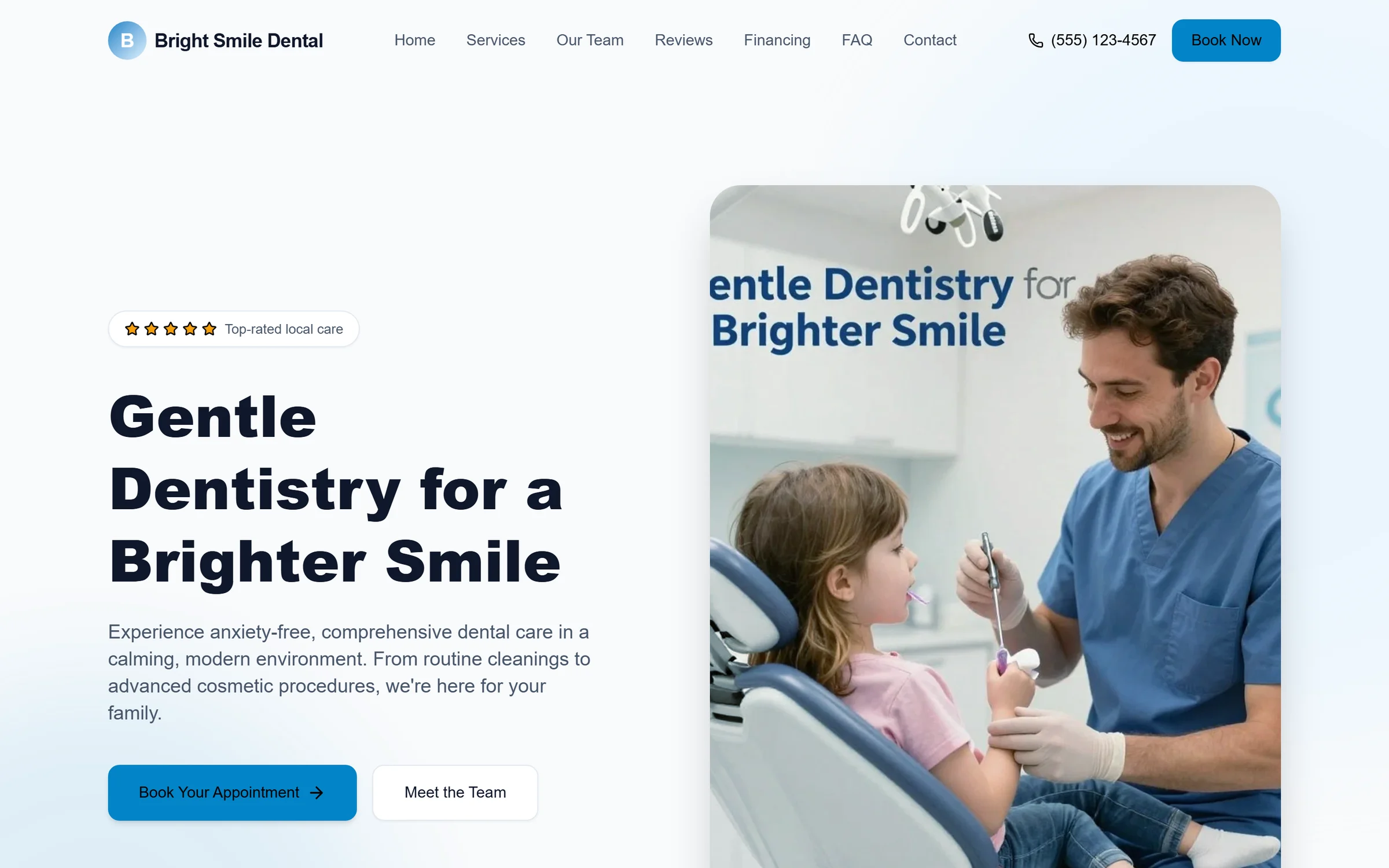
Treatments
A page for each thing you do, not a list on one page.
Somebody types the name of a treatment, not the name of your practice. If implants, whitening and children's dentistry are three lines on a services page, that is one page trying to answer three different worries. Give each one a page, in your own words, at the length the question deserves.
- Its own title and descriptionEach page carries its own page title and summary for search engines, written per page rather than copied across the site.
- As long as it needs to beWhat happens, what it costs, how long it takes, what the recovery is like. Nobody was ever reassured by two sentences.
- Add one when you add a treatmentTake on a new procedure and add a page for it. You are not waiting on anyone or paying for the privilege.
Three practices, three looks
Two dental practices and a family practice, each built from a few sentences.
None of these shares a template with the others. The composition, the typography and the colour were chosen for that brief — orange and white with the chair in shot, a full-bleed portrait in sand tones, a raspberry accent and a stethoscope. Your practice gets three complete versions to choose between, all from one approved content plan.
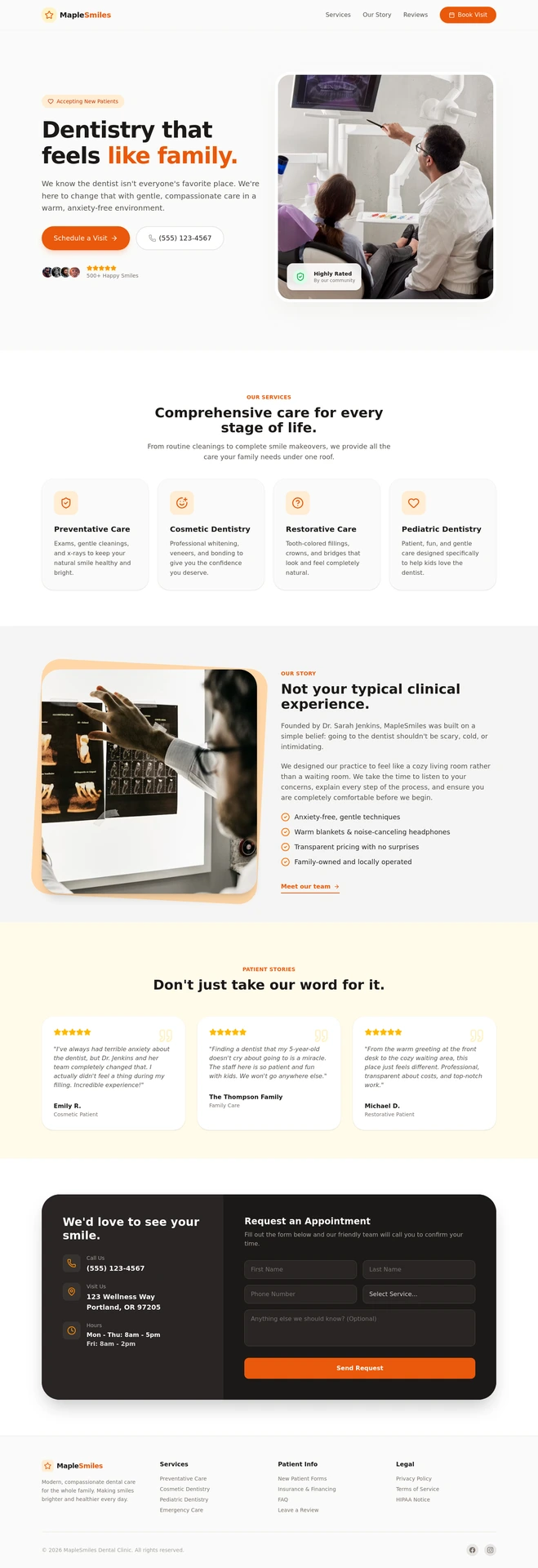
White and orange, a photograph of the chair.
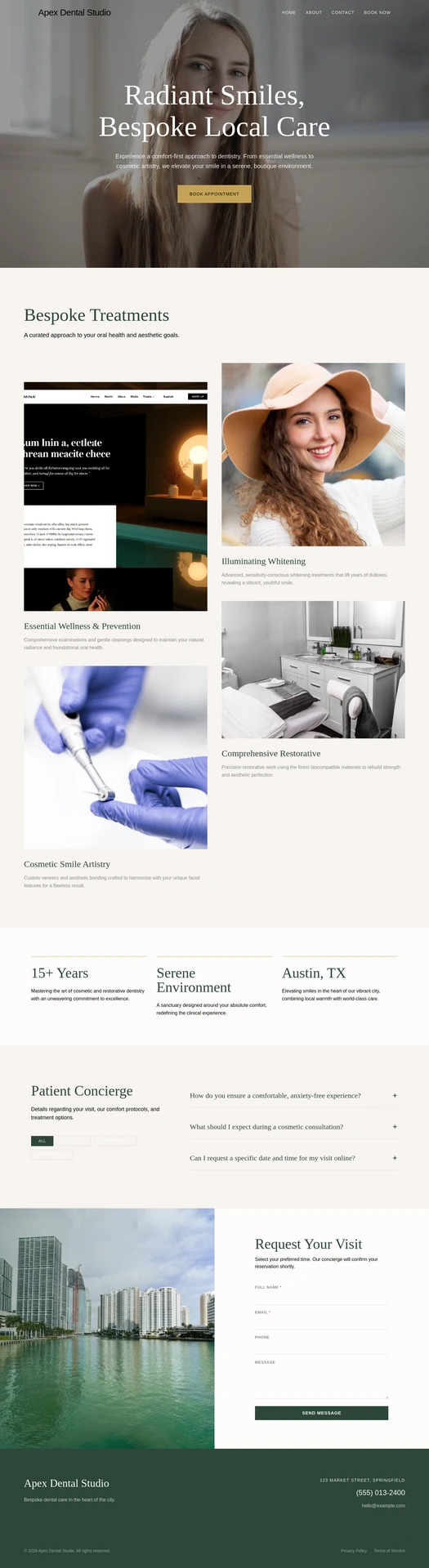
A full-bleed portrait, serif, sand tones.
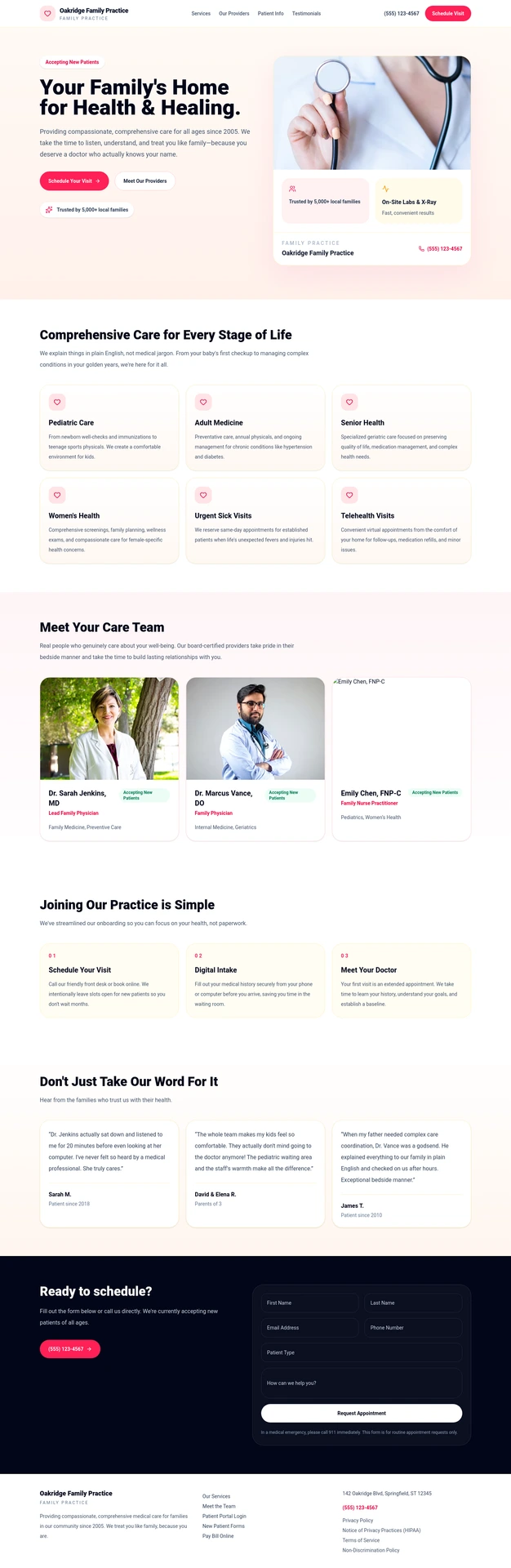
White, a raspberry accent, the stethoscope card.
Real generated sites, shown as demonstrations rather than customers. The practices, the people and everything written on them are invented.
See more in the galleryThe enquiry
It has to actually reach the practice.
The most common way a website loses a patient is silently: a form that goes to an address nobody reads, or to a service that stopped forwarding two years ago and never said.
- 1
The form is part of the site
No third-party form service in the middle, nothing to embed, no separate account that can lapse.
- 2
It arrives twice
Emailed to you, and filed in the site's own inbox. If nobody has set an address, it goes to whoever owns the account, so it works from day one.
- 3
It becomes a person
Anyone who leaves an email address becomes a contact with a record of what they asked and when, so the next conversation starts where the last one stopped.
Enquiries are not metered and not charged for, so a good month costs the same as a quiet one.
Trust
Show the things you can prove.
A health business is judged on signals, and the honest ones are the ones you already have.
The people
Names, faces, qualifications and how long they have been doing it. A team page does more work than any adjective.
The place
Photographs of the actual surgery, the address, a map and the parking. Nervous people like to know what they are walking into.
The practicalities
Opening hours, whether you take emergencies, what happens if someone is late, and the phone number near the top of every page.
What we will not do is invent the rest. There are no testimonials here, no star ratings and no review counts — if you want those on your site they have to be real ones you have collected. Everything a generated page says about your practice is a first draft that you check before it goes anywhere.
Being straight with you
Where the website stops.
This builds and runs the website. It does not run the practice. Appointment requests can come through the site, with a calendar and reminders if you want them. Your patient records, your recalls and whatever software the front desk lives in stay exactly where they are, and the site does not touch them.
Nothing on this page is advice about how patient information should be handled. That is between you, your indemnifier and your regulator, and no website builder can answer it for you.
Once it is live
It can keep in touch with patients, once you have read what it says.
The same account drafts the emails, the follow-ups and the posts, in the colours of the site. Nothing goes out until you send it, schedule it or switch it on.
New-patient enquiries, followed up
When someone fills in the new-patient form, a short series of emails can follow: what a first appointment involves, what to bring, how to find you. It is saved switched off until you have read it and turned it on.
- What happens at a first visit
- Parking and directions
- A reminder before the appointment, if patients book on the site
A note to the people on your list
A new hygienist, extended opening hours, children's appointments in the school holidays. The email is drafted for you and waits until someone at the practice sends it.
Posts that answer the questions you get
Each post is written for you, with an image or a short captioned video made to match in the site's colours. It goes to your connected Instagram and Facebook when you schedule it, and not before.
Or ask for it in a chat
Connect Mondovo to Claude or ChatGPT and ask: "Add a page for clear aligners and draft an email about it to our list." The page is ready for you to read before you publish, and the email waits in drafts.
Your recall list stays in your practice software; none of this reaches into it. Emails to your list go out from your own domain, once it is verified for sending.
What you can do from Claude or ChatGPTWhat it costs
Two prices, and nothing in between.
For building it and showing the partners.
- Five drafts to work on
- One site published on a Mondovo web address
- No custom domain on this plan
For the site the practice actually uses.
- Your own domain, hosting and the padlock
- Three people on the account, $10 a month each after that
- Pages, visitors and enquiries are not counted
A second practice is a second live site at another $20 a month, in the same account.
Questions
What practice managers ask first.
Who writes the words about the treatments?
The first draft is generated from what you tell it about the practice. You are shown a plan of what every page will say before a single design is made, and you change anything that is wrong at that point. Nothing publishes until you press publish.
Can patients book an appointment on it?
They can, if you want them to: there is a booking calendar with your availability on it, and a reminder can go to the patient before the appointment. If your diary lives in practice software, leave it there and the site sends people to it. Enquiries land in your inbox and your email either way.
We have a website already.
Give it the address and the pages and words come across, so you are not retyping thirty treatment pages. You review what it found before anything is designed.
Can the practice manager change things without me?
Yes. Three people are included on the paid plan. Whoever changes something is recorded and every version is kept, so a mistake is undone rather than argued about.
What if the look is wrong for a clinic?
You get three complete versions from the same approved content, and you can ask for more. A site holds up to ten and you choose which is live, so switching later is a click rather than a rebuild.
Will people find the treatment pages?
Each page has its own title and description, and the site produces a sitemap and structured data. What we will not do is promise you a position in the results, because nobody honest can.
Your practice
Describe the practice and read what it writes.
You will see the plan for every page before anything is built, and you can walk away at that point.
See how it works, step by step